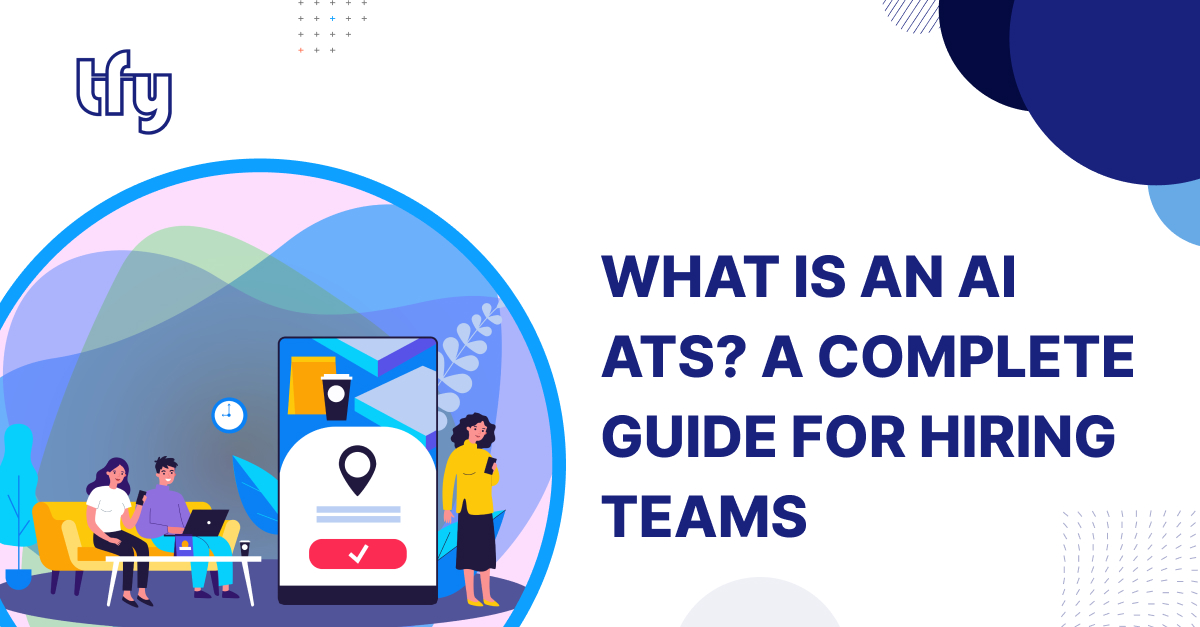
Recruitment has changed dramatically over the past decade. What was once a manual, inbox-driven process has evolved into a technology-led function shaped by automation, data, and artificial intelligence. At the centre of this shift is the AI ATS a new generation of applicant tracking systems designed to help organisations hire faster, more fairly, and at scale.
But what exactly is an AI ATS? How does it differ from a traditional ATS tool for recruitment? And what should organisations understand before adopting one?
This guide explores how AI-powered applicant tracking systems work, where they add real value, and what hiring teams should consider as AI becomes embedded in recruitment workflows.
What Is an AI ATS?
An AI ATS (Artificial Intelligence Applicant Tracking System) is recruitment software that uses artificial intelligence including machine learning and natural language processing to automate, optimise, and enhance key stages of the hiring process.
Unlike traditional ATS platforms, which primarily function as digital filing systems for CVs, an ai powered applicant tracking system actively supports decision-making. It analyses candidate data at scale to identify patterns, rank applicants, and surface insights that would be difficult to uncover manually.
In simple terms:
- A traditional ATS stores applications.
- An ai powered ATS helps interpret candidate data to support smarter hiring decisions.
How an AI ATS Works in Practice
An AI ATS typically supports multiple stages of the recruitment lifecycle.
1. Job Creation and Role Definition
Some AI-powered ATS platforms assist with job description creation by analysing labour market data and recommending inclusive, skills-based language. This helps attract a broader and more relevant candidate pool.
2. CV Parsing and Data Structuring
Using natural language processing (NLP), AI ATS tools extract structured data from CVs including skills, experience, and qualifications regardless of formatting. This capability is now foundational to any modern ATS tool for recruitment.
3. Candidate Matching and Ranking
Machine learning models compare candidate profiles against role requirements and highlight applicants who meet core criteria. This ranking supports recruiters in prioritising review, particularly in high-volume hiring.
Research published by Harvard Business Review on AI in recruiting highlights how data-assisted screening can reduce noise in early hiring stages when implemented responsibly.
4. Workflow Automation
An ai powered ATS often automates repetitive tasks such as:
- Candidate status updates
- Interview scheduling
- Interview reminders
- Communication workflows
This reduces administrative burden while improving the candidate experience.
5. Reporting and Hiring Insights
Advanced AI-powered applicant tracking systems generate structured hiring analytics, including time-to-hire, candidate drop-off rates, and sourcing effectiveness. Over time, these insights help organisations refine recruitment strategy.
Why Organisations Are Adopting AI ATS Platforms
The growing adoption of AI ATS technology is driven by structural changes in the labour market rather than trend-driven hype.
According to the World Economic Forum’s research on the future of work, organisations are increasingly expected to operate efficiently with leaner teams making automation and intelligent systems essential.
Key drivers include:
Increasing Application Volumes
Remote and global hiring have significantly expanded candidate pools, making manual screening unsustainable.
Pressure to Hire Faster
Delays in hiring impact productivity, service delivery, and organisational growth.
Demand for Better Candidate Experience
Fragmented communication and slow response times damage employer brand and trust.
Greater Accountability
Recruitment teams are increasingly expected to provide data-backed insights to leadership, finance, and governance teams.
AI ATS vs Traditional ATS: Key Differences
Feature |
Traditional ATS |
AI ATS |
|
CV parsing |
Basic |
Advanced NLP |
|
Candidate ranking |
Manual or rules-based |
AI-assisted |
| Automation |
Limited |
Extensive |
| Insights |
Static reporting |
Predictive analytics |
| Scalability | Moderate |
High |
While not every organisation requires advanced AI functionality, many find that an ai powered applicant tracking system becomes increasingly valuable as hiring complexity grows.
Benefits of an AI-Powered Applicant Tracking System
1. Reduced Administrative Load
Automation allows HR teams to focus on interviews, workforce planning, and candidate engagement.
2. Improved Consistency
AI-assisted screening applies consistent criteria across applications, reducing variability caused by manual shortcuts.
3. Faster Shortlisting
Candidate ranking tools help recruiters prioritise review efficiently.
4. Better Strategic Insight
Over time, AI ATS platforms reveal hiring patterns that inform workforce planning and long-term talent strategy.
Important Considerations and Risks
AI-powered ATS adoption also requires careful consideration.
Bias and Fairness
If models are trained on biased historical data, they may replicate existing inequalities. The OECD’s work on AI and employment emphasises transparency, governance, and human oversight in algorithmic hiring systems.
Explainability
Organisations should understand how AI recommendations are generated and ensure decisions can be explained to candidates and stakeholders.
Human Oversight
Most experts agree that AI should support not replace recruiter judgement. Accountability must remain human-led.
Who Benefits Most From an AI ATS?
An AI ATS is particularly valuable for:
- Organisations hiring at scale
- Distributed or remote teams
- HR teams with limited capacity
- Multi-jurisdictional organisations
- Teams seeking better recruitment data and governance
For smaller teams, a simpler ATS tool for recruitment may be sufficient. For growing organisations, an ai powered ATS often becomes a strategic necessity.
The Future of AI ATS Technology
AI in recruitment is moving beyond screening toward predictive workforce intelligence. Future AI ATS platforms are expected to:
- Forecast hiring demand
- Identify skills gaps
- Support internal mobility
- Integrate with broader workforce management systems
As highlighted in McKinsey’s research on people and organisational performance, organisations that invest in intelligent talent systems are better positioned to adapt to labour market change.
Final Thoughts
AI is rapidly becoming a foundational layer of modern recruitment, and the rise of the AI ATS reflects a broader shift toward more data-informed, scalable, and consistent hiring practices. When used responsibly, an AI-powered applicant tracking system can reduce administrative burden, improve visibility across hiring pipelines, and support better decision-making without removing the human judgement that remains essential to recruitment.
What is increasingly clear is that access to these tools should not be limited by organisational size or budget alone. As AI becomes embedded in hiring infrastructure, questions around equity, access, and responsible adoption are becoming just as important as efficiency gains.
Some providers are beginning to address this gap. TFY, for example, offers the core services of its AI-powered ATS free for charities and NGOs, reflecting a growing recognition that mission-driven organisations face many of the same hiring complexities as commercial enterprises, often with far fewer resources. For nonprofits and social impact organisations, access to modern recruitment systems can directly support their ability to hire, mobilise talent, and deliver impact more effectively.
As AI continues to reshape recruitment, organisations that combine intelligent systems with transparency, governance, and human oversight will be best positioned to build resilient, inclusive, and future-ready hiring processes regardless of sector.